

CMNL PUBLICATIONS
At ChangeMaker Nexus (CMNL), we are dedicated to fostering knowledge, innovation, and critical discourse through impactful publications. Our research and literary contributions span various fields, including digital transformation, gender literacy, cultural advancement, and ethical research methodologies. Below are some of our notable publications:


Sanjida’s Diary: The Journey of Life
“সানজিদার ডায়েরি: জীবনের পথ চলা” বইটি এক নারীর জীবনের গল্পকে কেন্দ্র করে রচিত, যেখানে সংগ্রাম, স্বপ্ন এবং বাস্তবতার এক অনন্য মিশ্রণ ফুটে উঠেছে। এই বইটি উদীয়মান লেখকদের জন্য একটি অনুপ্রেরণার প্রতীক, যা “চেঞ্জমেকার নেক্সাস” এর সিএমএন এবং সাংস্কৃতিক অগ্রগতি প্রোগ্রাম এর সহায়তায় প্রকাশিত হয়েছে। বাংলা সাহিত্য সমৃদ্ধ করার লক্ষ্যে আমরা প্রতিশ্রুতিবদ্ধ।
“Sanjida’s Diary: The Journey of Life” is a book centered around the story of a woman’s life, where a unique blend of struggle, dreams, and reality unfolds. This book serves as a symbol of inspiration for emerging writers and has been published with the support of Changemaker Nexus’ CMN & Cultural Advancement Program. We are committed to enriching Bengali literature.
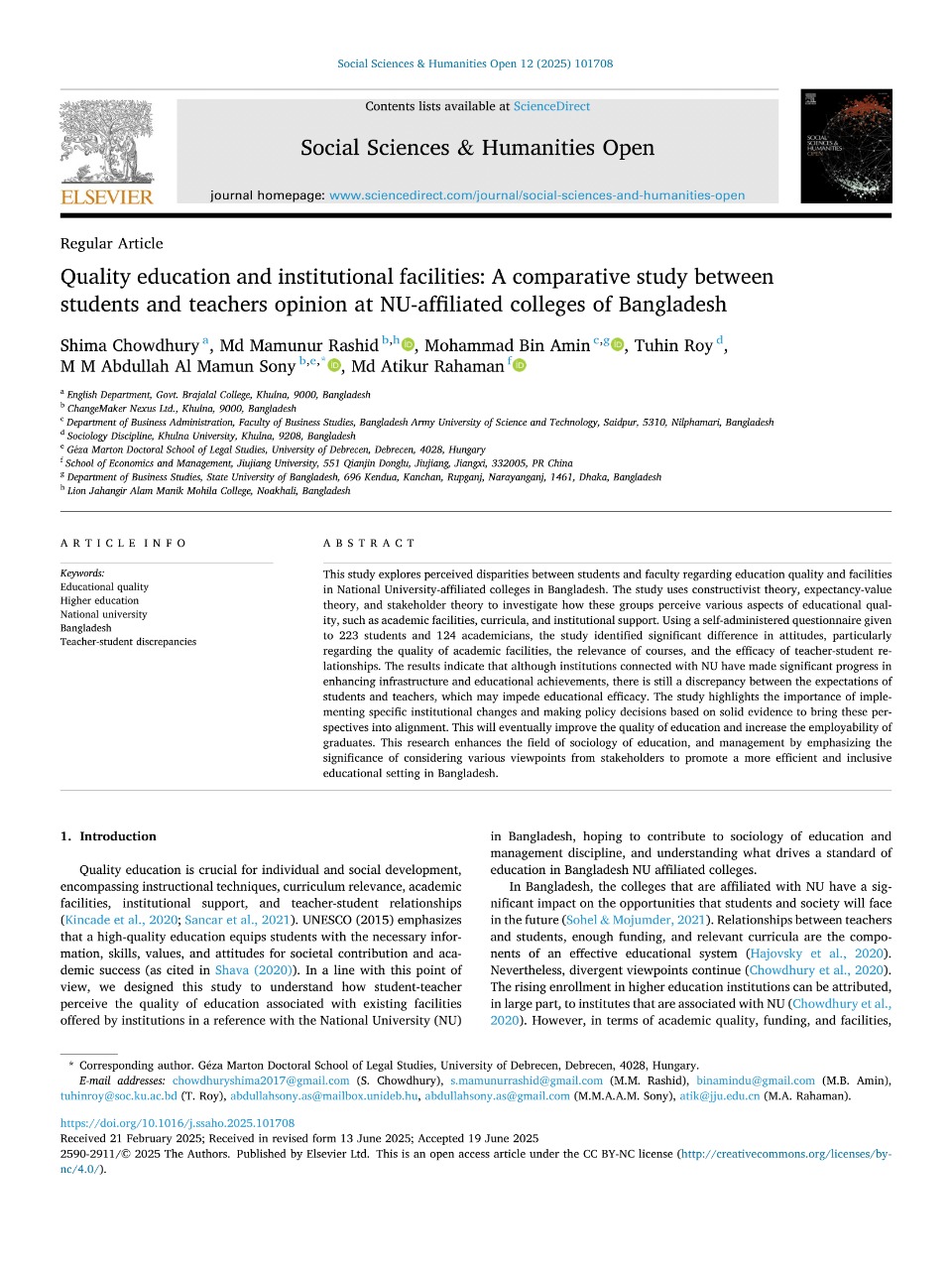
Quality education and institutional facilities: A comparative study between students and teachers opinion at NU-affiliated colleges of Bangladesh
This study investigates the perceptual gap between students and faculty members on education quality and institutional facilities in National University-affiliated colleges in Bangladesh. The findings reveal key differences that could affect teaching effectiveness and student outcomes, calling for evidence-based reforms to align stakeholder expectations and improve overall educational performance.
Read The Full Paper Here:
https://doi.org/10.1016/j.ssaho.2025.101708
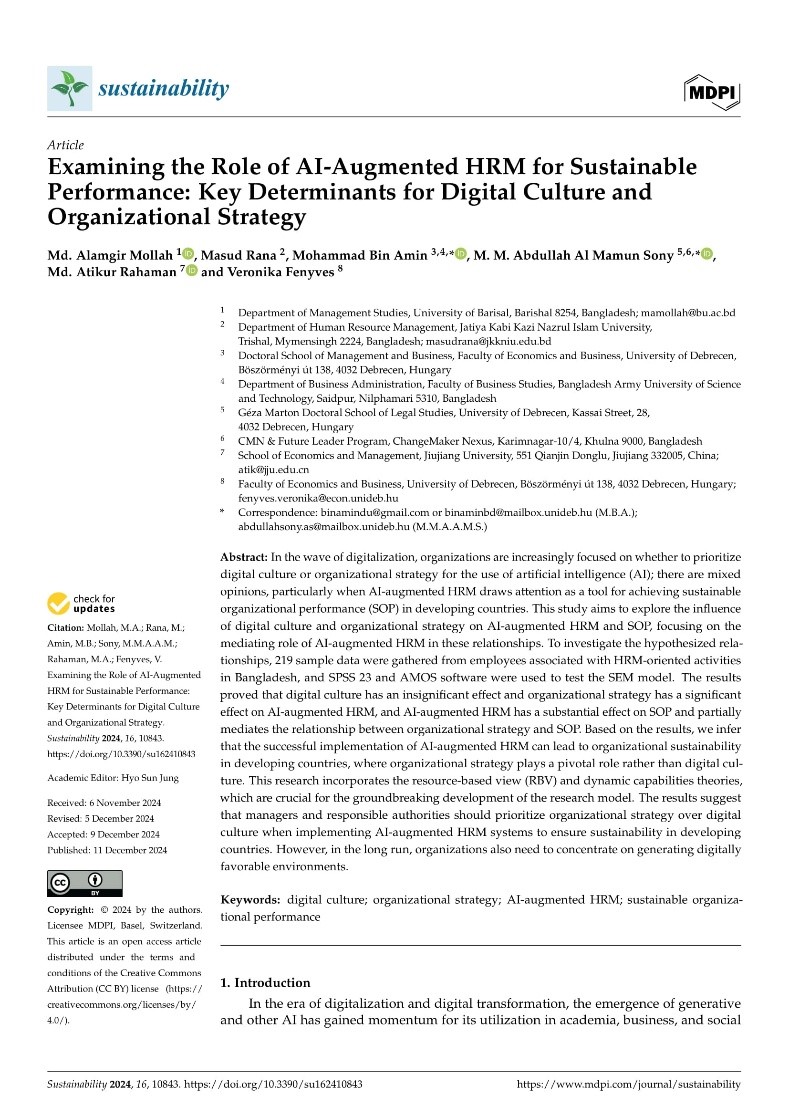
The Role of AI-Augmented HRM in Sustainable Organizational Performance
In the age of digital transformation, organizations face a critical dilemma—should they prioritize digital culture or organizational strategy when integrating AI-augmented human resource management (HRM)? This study examines the impact of digital culture and organizational strategy on AI-augmented HRM and its role in achieving sustainable organizational performance (SOP) in developing countries.
Using Structural Equation Modeling (SEM) with data from 219 HRM professionals in Bangladesh, the research finds that while organizational strategy significantly influences AI-augmented HRM, digital culture has a limited direct impact. Additionally, AI-augmented HRM plays a key mediating role in enhancing sustainable organizational performance. The findings underscore the importance of strategic planning over digital culture for successfully implementing AI-driven HRM systems in resource-constrained environments.
One of the co-authors of this study is affiliated with CMN & Future Leader Program, highlighting Changemaker Nexus’ dedication to fostering research-driven innovation in AI, digital transformation, and sustainable business
practices. This contribution aligns with CMN’s mission to empower knowledge and shape the future of AI-integrated organizational strategies.
Read the Full Paper: https://doi.org/10.3390/su162410843

Status of Gender Literacy in Academia: A Critical Analysis of Secondary School Students in Bangladesh
The chapter “Status of Gender Literacy in Academia: A Critical Analysis of Secondary School Students in Bangladesh” examines the evolving landscape of gender literacy and its impact on identity, inclusivity, and societal perceptions. It reveals an inverse relationship between formal academic engagement and gender literacy, emphasizing the role of socioeconomic factors and digital access in shaping students’ understanding of gender roles. By advocating for a feminist poststructuralist approach, the study highlights the importance of inclusive education that empowers students to express their gender identities without prejudice. This publication is supported by CMN & General Knowledge Management Program, which is dedicated to fostering critical discourse and advancing knowledge on gender inclusivity in academic and policy-making spaces.
Read the Full Paper: https://doi.org/10.1007/978-981-97-8971-9_2
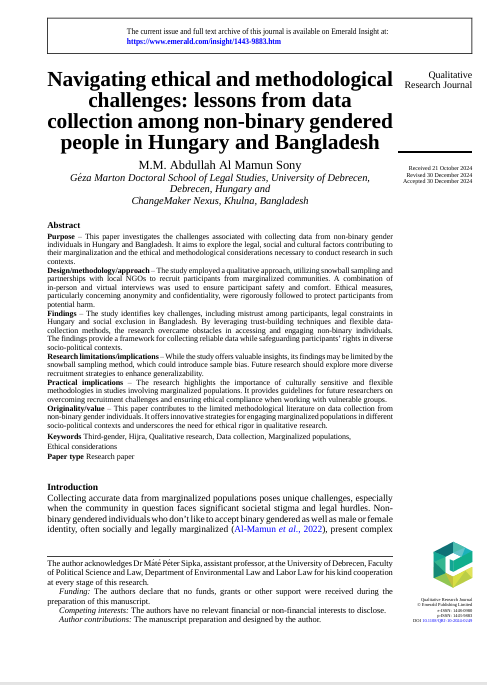
Navigating Ethical and Methodological Challenges in Gender Research
The article “Navigating Ethical and Methodological Challenges: Lessons from Data Collection Among Non-Binary Gendered People in Hungary and Bangladesh” by M. M. Abdullah Al Mamun Sony explores the complexities of conducting qualitative research with marginalized gender identities across distinct socio-political landscapes. Through Changemaker Nexus’ Gender Knowledge Management Program, this study highlights innovative strategies for ethical and inclusive data collection, emphasizing the role of trust-building and flexible methodologies. Addressing legal constraints in Hungary and social exclusion in Bangladesh, the research underscores the necessity of cultural sensitivity, anonymity, and confidentiality in working with vulnerable communities. This publication significantly contributes to the methodological discourse on gender research, offering valuable insights for scholars navigating similar challenges in diverse contexts
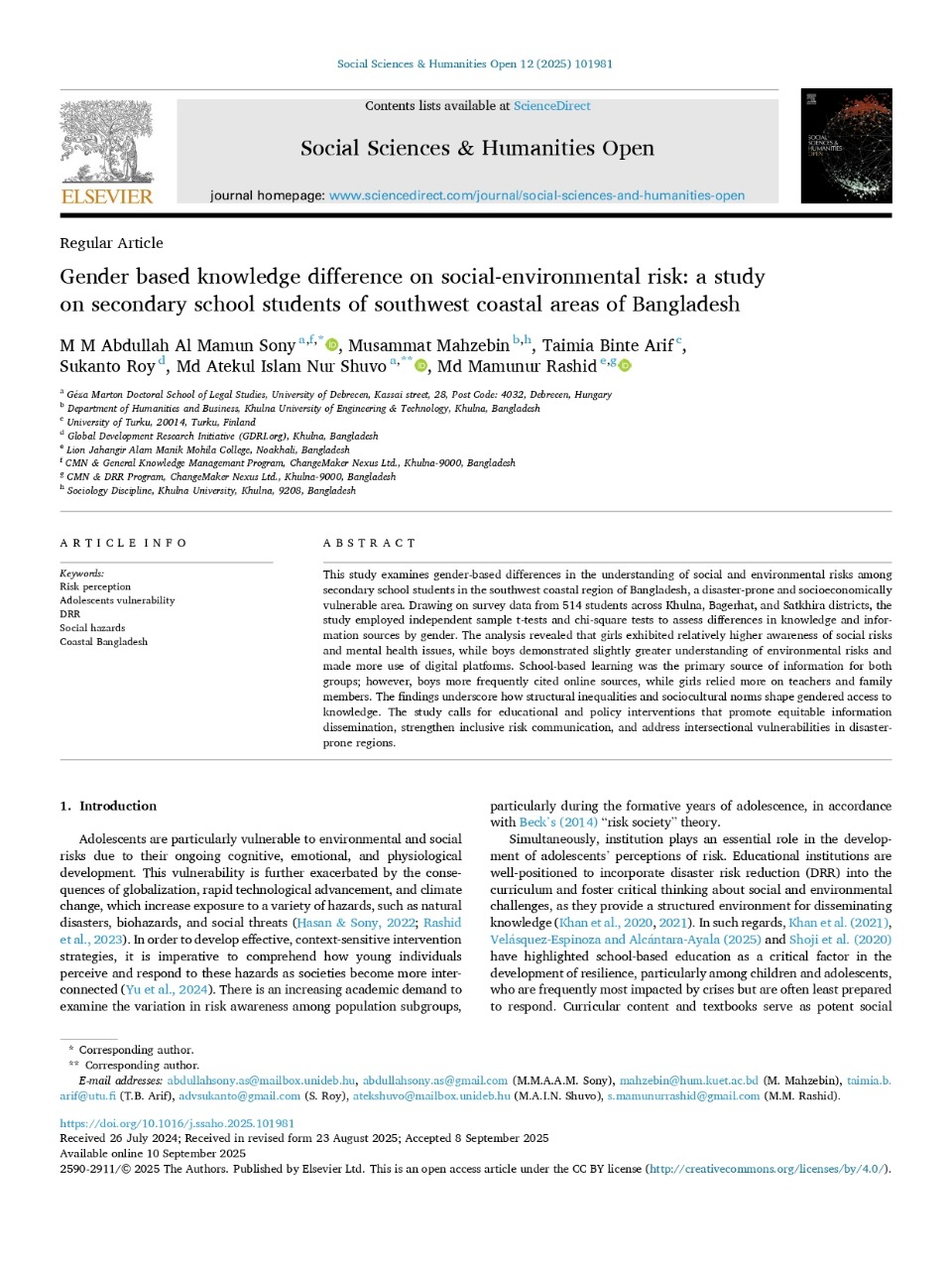
Gender based knowledge difference on social-environmental risk: a study on secondary school students of southwest coastal areas of Bangladesh
This study examines gender-based differences in the understanding of social and environmental risks among secondary school students in the southwest coastal region of Bangladesh, a disaster-prone and socioeconomically vulnerable area. Drawing on survey data from 514 students across Khulna, Bagerhat, and Satkhira districts, the study employed independent sample t-tests and chi-square tests to assess differences in knowledge and information sources by gender. The analysis revealed that girls exhibited relatively higher awareness of social risks and mental health issues, while boys demonstrated slightly greater understanding of environmental risks and made more use of digital platforms. School-based learning was the primary source of information for both groups; however, boys more frequently cited online sources, while girls relied more on teachers and family members. The findings underscore how structural inequalities and sociocultural norms shape gendered access to knowledge. The study calls for educational and policy interventions that promote equitable information dissemination, strengthen inclusive risk communication, and address intersectional vulnerabilities in disaster-prone regions.
Read the Full paper:
https://doi.org/10.1016/j.ssaho.2025.101981
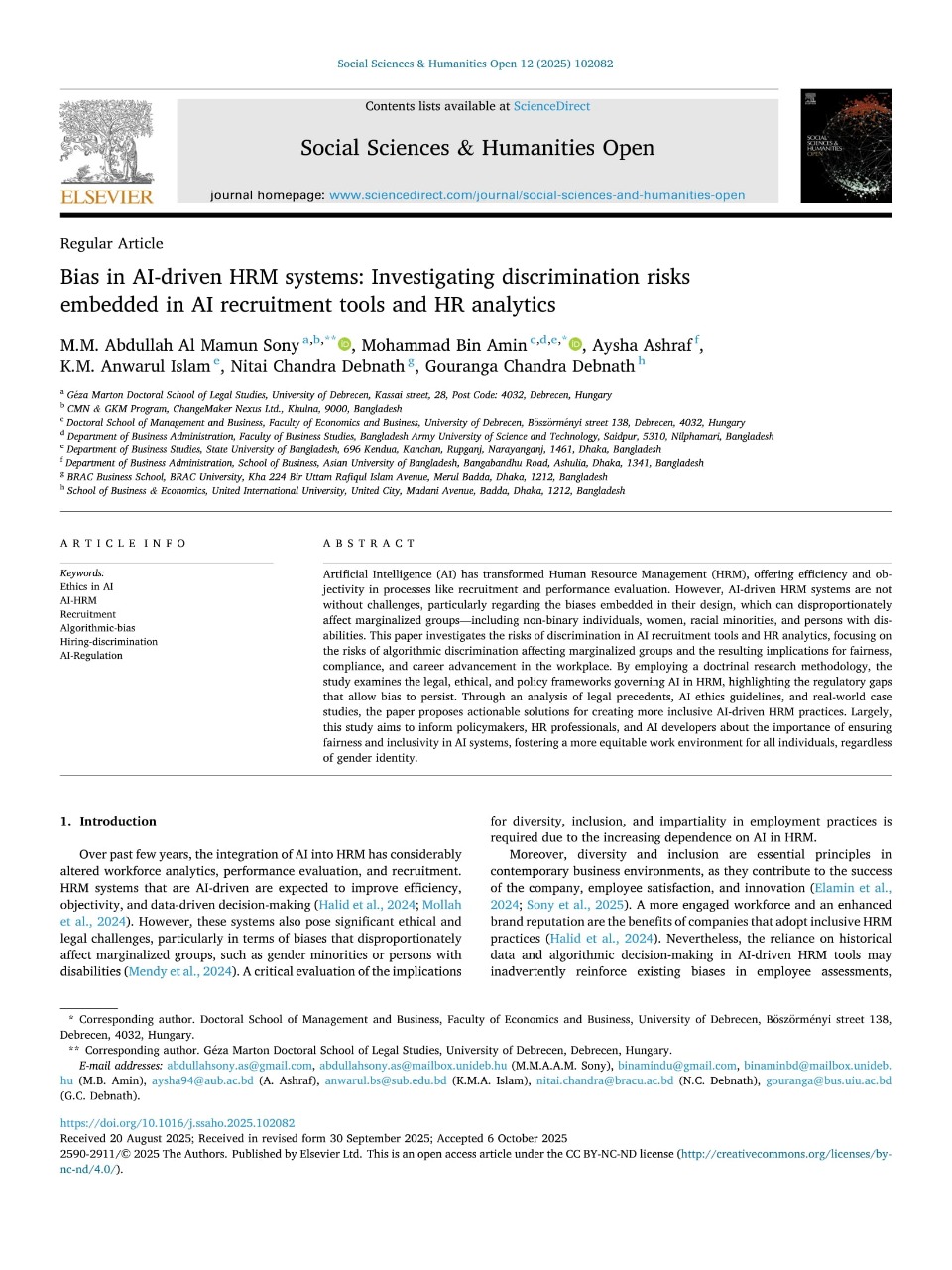
Bias in AI-driven HRM systems: Investigating discrimination risks embedded in AI recruitment tools and HR analytics
Artificial Intelligence (AI) has transformed Human Resource Management (HRM), offering efficiency and objectivity in processes like recruitment and performance evaluation. However, AI-driven HRM systems are not without challenges, particularly regarding the biases embedded in their design, which can disproportionately affect marginalized groups—including non-binary individuals, women, racial minorities, and persons with disabilities. This paper investigates the risks of discrimination in AI recruitment tools and HR analytics, focusing on the risks of algorithmic discrimination affecting marginalized groups and the resulting implications for fairness, compliance, and career advancement in the workplace. By employing a doctrinal research methodology, the study examines the legal, ethical, and policy frameworks governing AI in HRM, highlighting the regulatory gaps that allow bias to persist. Through an analysis of legal precedents, AI ethics guidelines, and real-world case studies, the paper proposes actionable solutions for creating more inclusive AI-driven HRM practices. Largely, this study aims to inform policymakers, HR professionals, and AI developers about the importance of ensuring fairness and inclusivity in AI systems, fostering a more equitable work environment for all individuals, regardless of gender identity.
Read the Full paper:
https://doi.org/10.1016/j.ssaho.2025.102082
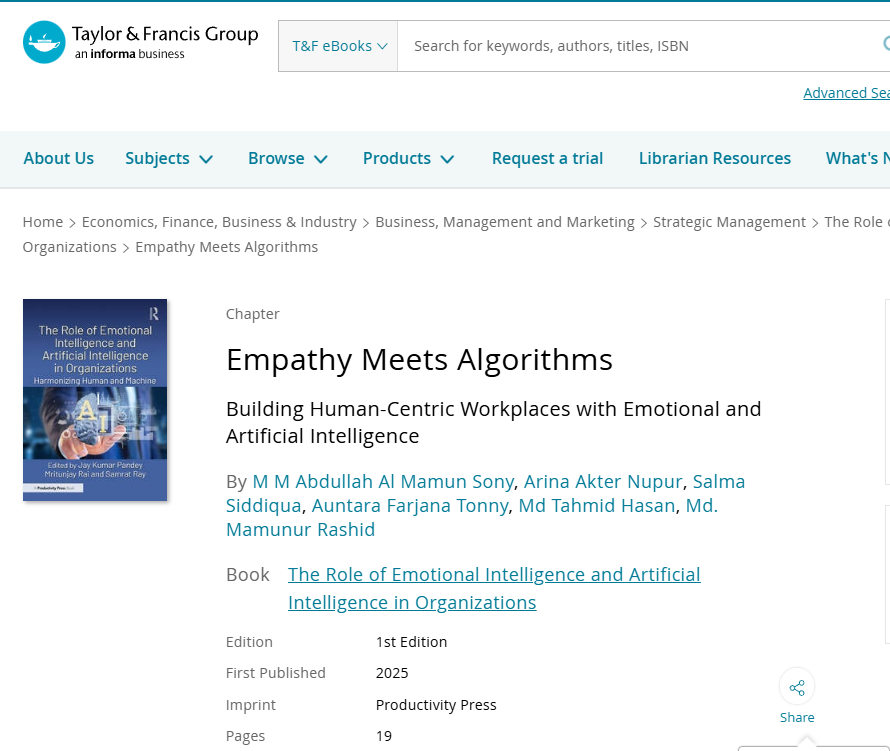
Empathy Meets Algorithms
The convergence of Emotional Intelligence (EI) and Artificial Intelligence (AI) is redefining modern workplaces by merging technological efficiency with human empathy, creating environments that are both inclusive and productive. While AI automates routine tasks, processes vast data, and enhances creative problem-solving, it simultaneously heightens the demand for human-centric skills such as empathy, adaptability, and ethical decision-making. This chapter shows how emotionally intelligent leaders and teams can use AI-driven insights to improve decision-making, conflict resolution, and collaboration, creating personalized employee engagement strategies that boost satisfaction and productivity. Besides, these discussions focus on the ethical dangers of prejudice and ethical shortcomings in AI-powered systems that make hiring and performance assessment decisions. Organizations may reduce risks and improve stakeholder trust by including empathy, justice, and responsibility in AI operations. The chapter offers actionable strategies for aligning EI and AI to promote sustainable growth, emphasizing the importance of cultivating emotionally intelligent leadership, designing AI with ethical safeguards, and fostering continuous learning. In short, to succeed in a competitive global economy, integrating human and machine intelligence is both operational and strategic.
Read the Full paper:
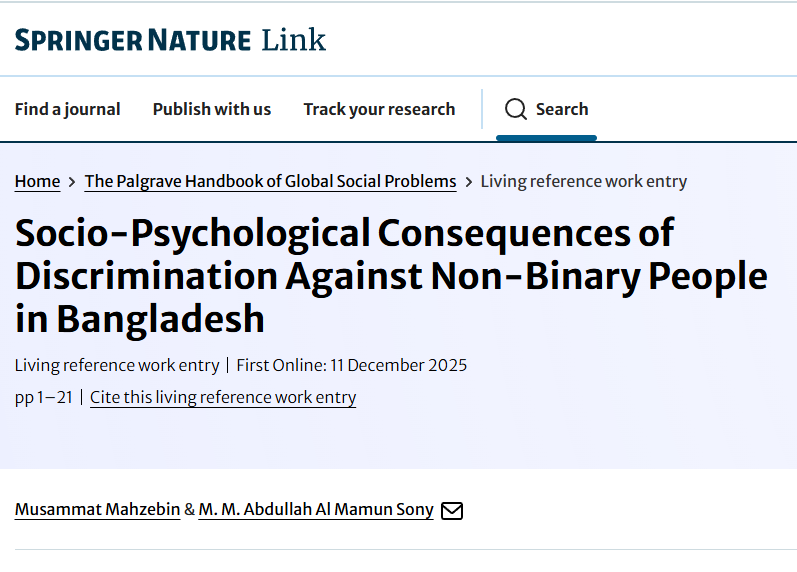
Socio-Psychological Consequences of Discrimination Against Non-Binary People in Bangladesh
This study explores the socio-psychological consequences of common discrimination experienced by non-binary individuals in Bangladesh, with a particular emphasis on the Hijra community, which is legally recognized as a third gender. Systemic barriers persist in the familial, educational, healthcare, and workplace domains, despite this acknowledgment, thereby exacerbating psychological distress and cultivating feelings of invisibility and worthlessness. The research employs a qualitative case comparative study with 28 respondents who have been selected through snowball sampling to examine the intersectionality of these discriminatory experiences and their compounded effects on emotional well-being, self-esteem, and interpersonal relationships. The results indicate that community networks, faith-based practices, and artistic manifestations serve as critical coping mechanisms, even though discrimination restricts access to essential resources and perpetuates social exclusion. The study underscores the necessity of inclusive structural interventions, such as gender-sensitive policies, anti-discrimination legislation, and public awareness campaigns, to address the paradox between legal acknowledgment and persistent societal marginalization. This research contributes to the discourse on gender diversity and equity by analyzing culturally specific and intersectional resilience strategies. It provides policymakers, educators, and advocates with actionable insights to promote inclusion and protect the rights of non-binary individuals in Bangladesh.
Read the Full paper:
https://doi.org/10.1007/978-3-030-68127-2_749-1
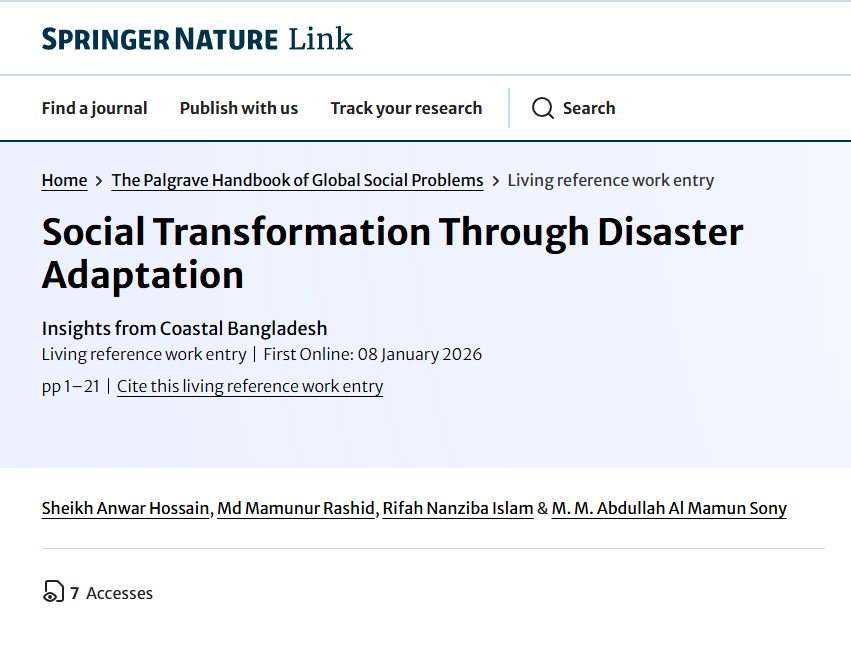
Social Transformation Through Disaster Adaptation
This chapter synthesizes findings from existing studies to examine the complex interplay between disaster adaptation and social change within coastal communities. These communities—frequently marked by systemic inequities, geographic precarity, and limited political representation—are disproportionately affected by disasters. Yet, their adaptive responses and the resulting social transformations remain insufficiently explored. Drawing on a systematic review of qualitative and quantitative research conducted between 2000 and 2023, this chapter identifies three key thematic areas: (1) the vital role of informal networks and indigenous knowledge systems in building resilience; (2) the dual function of disasters as both drivers of emancipatory change (e.g., collective action, policy reform) and reinforcers of elemental inequalities (e.g., displacement, resource monopolization); and (3) the significant influence of formational constraints—such as neoliberal policy regimes and racialized governance frameworks—on communities’ adaptive capacities. The review reveals that while community-led initiatives often lead to more equitable and sustainable outcomes, they are frequently undermined by top-down interventions that disregard sociohistorical and cultural contexts. The literature also presents contradictions, particularly around the question of whether disasters intensify or alleviate preexisting vulnerabilities. Overall, this analysis highlights the importance of policies that prioritize grassroots leadership, embed traditional knowledge systems, and confront the root causes of marginalization. By bridging disaster adaptation research with social justice frameworks, this chapter reimagines adaptation as a transformative process grounded in equity and community empowerment.
Read the Full paper:
https://doi.org/10.1007/978-3-030-68127-2_745-1